
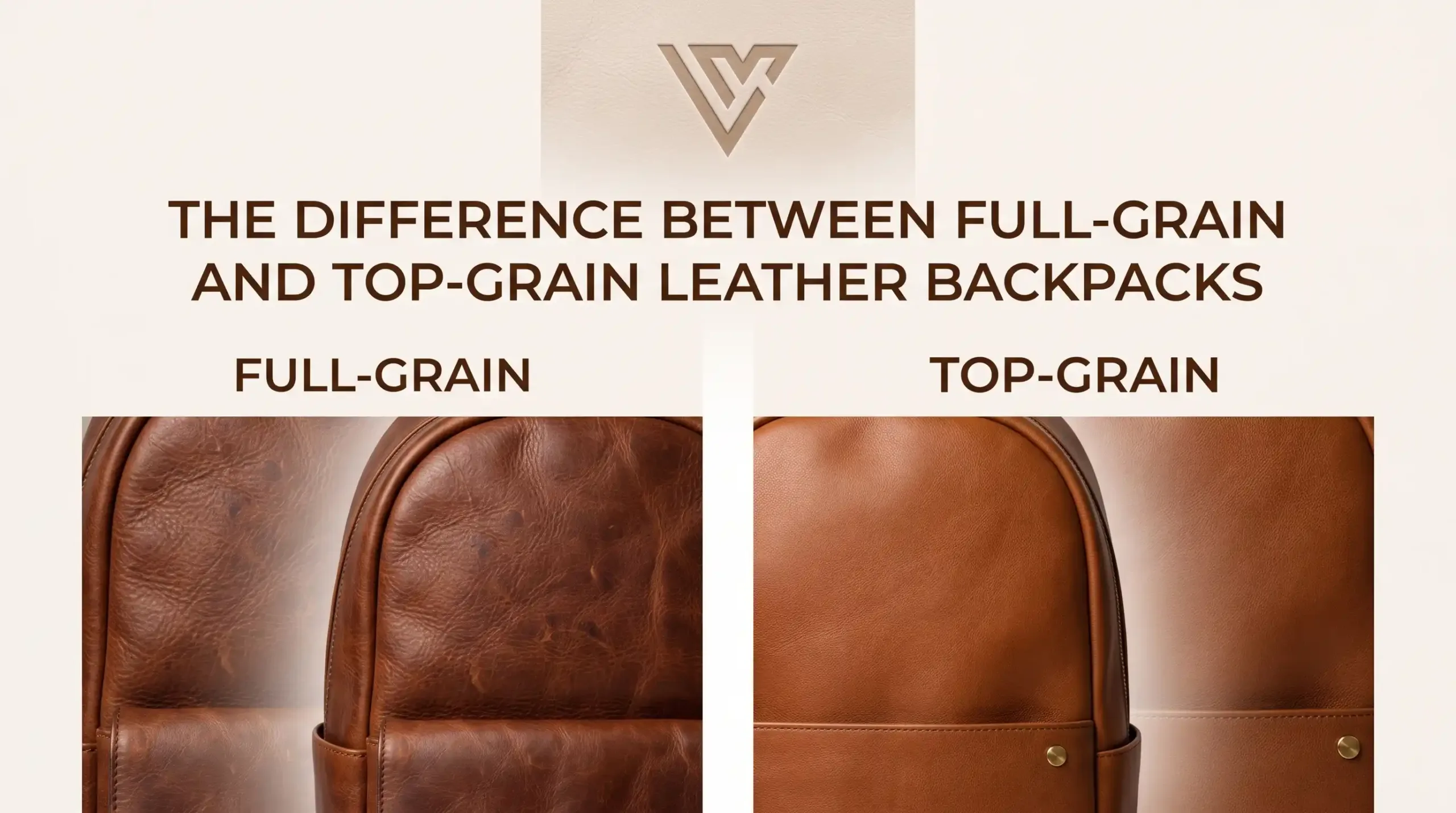
The Difference Between Full-Grain and Top-Grain Leather Backpacks
Leather backpacks have a way of outlasting trends. While synthetic materials and nylon bags come and go with the seasons, a well-made leather backpack can serve you for a decade or more, aging into something more beautiful with every scuff and scratch. But not all leather is created equal, and the terminology used to describe it can be genuinely confusing for shoppers. Two terms in particular cause the most hesitation at checkout: full-grain and top-grain leather backpacks.
At first glance, these phrases sound almost interchangeable. Both refer to leather taken from the top layer of a hide, both are considered “real” leather, and both show up in premium product descriptions. Yet the differences between them affect everything from durability and texture to price and how the bag will look twenty years down the road. If you’re shopping for a leather backpack whether for daily commuting, travel, business, or everyday carry understanding this distinction will help you make a decision you won’t regret.
In this guide, we’ll break down exactly what full-grain and top-grain leather are, how they’re made, how they perform over time, and which one is the better fit for different lifestyles and budgets. Whether you’re browsing options at leathermingle.shop or comparing bags across multiple retailers, this article will give you the vocabulary and confidence to choose wisely.
Understanding the Anatomy of a Hide
To understand the difference between full-grain and top-grain leather, it helps to first understand how a hide is structured. Animal hide, most commonly cowhide for backpacks, is made up of several layers:
- The grain layer: The outermost layer, closest to the animal’s hair. This is the toughest, most fibrous, and most visually distinctive part of the hide. It contains the natural markings, pores, and texture that give leather its character.
- The corium layer: Sits beneath the grain layer and is looser, more fibrous, and less dense.
- The flesh layer: The innermost layer, which is typically split away and used for suede or lower-grade leather products.
When tanneries process a hide, they often split it horizontally to create multiple usable layers from a single hide, maximizing yield and profit. What happens to that top grain layer whether it’s left intact or altered is exactly what separates full-grain leather from top-grain leather.
What Is Full-Grain Leather?
Full-grain leather is the uppermost layer of the hide, left completely intact. It has not been sanded, buffed, or altered to remove imperfections. Every natural mark insect bites, wrinkles, subtle scars, variations in texture remains visible in the finished product.
This might sound like a drawback if you’re picturing perfection, but in the world of leather craftsmanship, these imperfections are actually the selling point. Because the natural grain has not been sanded away, the tight, dense fiber structure of the hide remains fully intact. This is what gives full-grain leather its legendary durability and its ability to develop a rich patina over years of use.
Key characteristics of full-grain leather:
- Unaltered surface: The natural grain pattern is preserved
- Highest durability: The tightly woven fibers resist tearing, scuffing, and puncturing
- Breathable: Full-grain leather allows air to pass through, which helps prevent moisture buildup inside a backpack
- Develops a patina: Over months and years, full-grain leather darkens and develops a unique sheen based on exposure to sunlight, oils from your hands, and general wear
- More expensive: Because only a small percentage of hides are flawless enough to be used as full-grain leather without heavy processing, it commands a premium price
- Variability: Since imperfections are left in place, no two full-grain leather panels look exactly alike
A full-grain leather backpack is often described as an investment piece. It’s the kind of bag you buy once and use for the rest of your life, watching it transform from stiff and glossy to soft, supple, and deeply colored with wear.
What Is Top-Grain Leather?
Top-grain leather is also cut from the top layer of the hide, but with one crucial difference: the very top of the grain is sanded, buffed, or otherwise treated to remove imperfections. After this process, an artificial grain pattern or a corrected finish is often applied to create a more uniform, consistent appearance.
This process makes top-grain leather thinner and more pliable than full-grain leather. It’s also more resistant to staining because of the finish applied during processing, and it tends to look more polished and consistent right out of the box.
Key characteristics of top-grain leather:
- Sanded and refinished surface: Imperfections are buffed away for uniformity
- Softer and more pliable: Easier to work with in construction, resulting in sleeker designs
- More stain-resistant: The applied finish creates a protective barrier
- Slightly less durable: Removing the natural grain layer weakens the fiber structure somewhat compared to full-grain
- More affordable: A larger percentage of hides can be used, since imperfections are corrected rather than rejected
- Consistent appearance: Ideal for buyers who want a clean, uniform look without natural variation
Top-grain leather is what you’ll find in the vast majority of premium designer handbags, wallets, and backpacks. It strikes a balance between authenticity and manufacturability, and because it doesn’t require rejecting hides for minor blemishes, it’s more cost-effective to produce at scale.
Full-Grain vs. Top-Grain: A Side-by-Side Comparison
| Feature | Full-Grain Leather | Top-Grain Leather |
| Surface treatment | None natural grain preserved | Sanded/buffed and refinished |
| Durability | Highest | High, but slightly less than full-grain |
| Texture | Natural, variable, with visible marks | Smooth, consistent, uniform |
| Patina development | Develops rich patina over time | Minimal patina; more static appearance |
| Water/stain resistance | Lower unless treated | Higher due to applied finish |
| Weight and stiffness | Heavier, stiffer initially | Lighter and more flexible |
| Price | Higher | More affordable |
| Longevity | Decades with proper care | Many years, but wears faster than full-grain |
| Best for | Buyers who want authenticity and longevity | Buyers who want a polished look at a lower cost |
How to Tell the Difference When Shopping
Because both types are marketed as “genuine leather” or “real leather,” it can be difficult to tell them apart just by reading a product label. Here are a few practical ways to distinguish them:
1. Look at the texture
Full-grain leather will show natural variations small creases, faint marks, and an organic, slightly irregular surface. Top-grain leather tends to look smoother and more even, almost like it was printed with a consistent pattern.
2. Feel the material
Full-grain leather is generally thicker and stiffer when new, gradually softening with use. Top-grain leather often feels soft and pliable right out of the box because of the finishing process.
3. Check how it responds to touch
A helpful trick: press your finger into the leather. Full-grain leather will often show a temporary indentation that slowly fades, a sign of the natural fiber structure. Top-grain leather, having been sanded and coated, is less responsive to this kind of pressure.
4. Read the product description carefully
Reputable retailers will specify the type of leather clearly. If a backpack is described using vague terms like “leather-look,” “leather-like,” or “PU leather,” it’s likely not genuine leather at all a separate category from both full-grain and top-grain that shoppers should be cautious of. Stores like leathermingle.shop that specialize in genuine leather goods typically list the grain type directly in the product specifications, which makes comparison shopping much easier.
5. Consider the price point
As a general rule, if a leather backpack seems suspiciously affordable for what’s advertised as full-grain leather, it’s worth double-checking the description. Full-grain leather requires higher-quality hides and more selective sourcing, so its price tends to reflect that.
Durability Over Time: What to Expect
One of the biggest factors in choosing between full-grain and top-grain leather is how you expect the bag to look and perform years down the line.
Full-grain leather backpacks age dramatically. In the first few months, the surface may look stiff, glossy, or even a bit uneven in color. Over the following years, exposure to light, oils from your skin, and general handling will darken the leather and smooth out its texture, creating what’s known as a patina. This process is often compared to how raw denim fades and creases with wear the bag becomes more personal and unique the longer you use it. Scratches on full-grain leather often “heal” cosmetically, blending into the surface rather than becoming permanent blemishes, because the natural oils in the leather redistribute over the scratched area.
Top-grain leather backpacks maintain a more consistent appearance over time. Because the surface has been treated and sealed, it resists staining and doesn’t develop the same dramatic patina. Scratches are more likely to remain visible since the protective finish, once damaged, doesn’t self-heal the way natural grain does. That said, top-grain leather is often easier to clean and maintain for people who want a backpack that looks essentially the same on day 1,000 as it did on day one.
Weight, Comfort, and Everyday Practicality
Beyond aesthetics and durability, the type of leather affects how a backpack feels to actually carry.
Full-grain leather is naturally denser and heavier than top-grain leather, especially in the early stages of ownership before it has softened. For buyers who prioritize a lightweight daily bag students, commuters, or frequent flyers this is worth considering. A full-grain leather backpack loaded with a laptop, books, and accessories will weigh noticeably more than an equivalent top-grain design.
Top-grain leather, being thinner and more flexible, is often used in backpacks designed with more structure, pockets, and compartments, since it’s easier to mold and stitch into complex shapes without adding excessive bulk. If you want a backpack with lots of organizational features laptop sleeves, hidden zippers, multiple external pockets top-grain leather construction can make that design more comfortable to wear.
Price Considerations
Price is often the deciding factor for many shoppers, and it’s important to understand what you’re actually paying for.
Full-grain leather backpacks are more expensive primarily because of sourcing. Only hides with minimal natural blemishes qualify for full-grain use without heavy correction, and tanneries have to be selective. Combined with the labor-intensive tanning process required to preserve the natural grain, this drives up costs.
Top-grain leather backpacks are more accessible because the sanding and refinishing process allows a much larger percentage of each hide to be used. Imperfect sections of hide, which would otherwise be discarded or downgraded, can be corrected and used in top-grain production. This makes top-grain leather an appealing option for shoppers who want the look and feel of genuine leather without the premium price tag of full-grain.
If you’re comparing options within a similar price range, checking detailed specifications on retailer sites including material sourcing, tanning method, and country of origin can help you understand exactly what you’re paying for. Retailers focused specifically on leather goods, such as leathermingle.shop, often provide more detailed material breakdowns than general marketplace listings, which can make comparison shopping significantly easier.
Which One Should You Choose?
There’s no universally “better” option between full-grain and top-grain leather the right choice depends on your priorities.
Choose full-grain leather if:
- You want a backpack that will last decades with proper care
- You appreciate natural variation and don’t mind visible marks or an evolving patina
- You’re willing to invest more upfront for long-term value
- You don’t mind a slightly heavier, stiffer bag that softens with use
- You want a bag that develops character and tells a story over time
Choose top-grain leather if:
- You prefer a clean, consistent, polished appearance
- You want a lighter, more flexible bag
- You’re working with a moderate budget but still want genuine leather
- You want better resistance to stains and easier day-to-day maintenance
- You don’t want the leather’s appearance to change dramatically over time
Caring for Your Leather Backpack
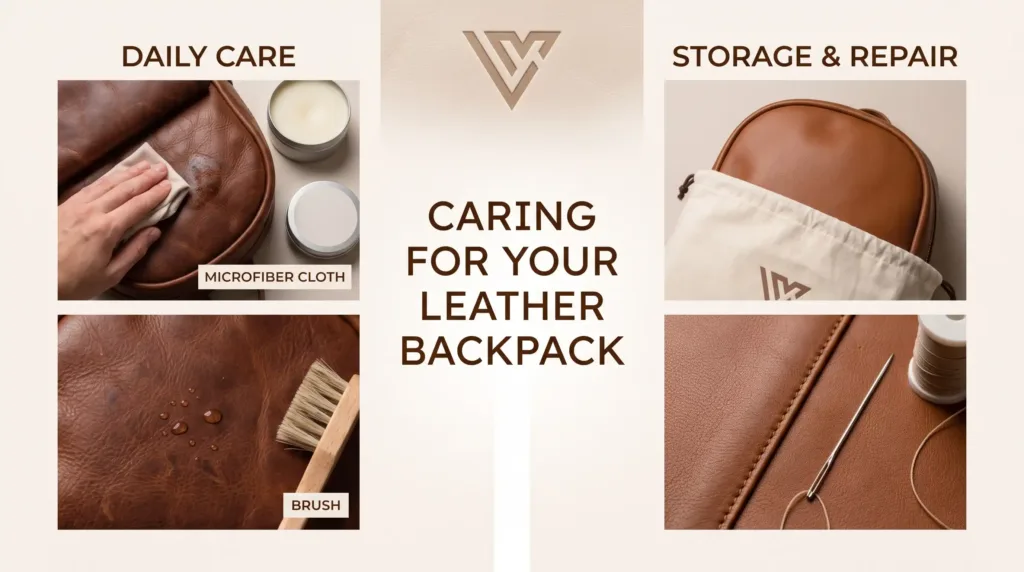
Regardless of which type you choose, proper care will significantly extend the life of your bag.
- Condition regularly: Leather conditioner helps replenish natural oils and prevents cracking, especially important for full-grain leather, which is more porous.
- Avoid prolonged sun exposure: Direct sunlight can cause uneven fading, particularly in full-grain leather.
- Keep it dry: While leather can tolerate light moisture, prolonged exposure to water can cause staining or warping. Wipe down wet leather promptly with a soft, dry cloth.
- Store it properly: Stuff your backpack with soft material (like tissue paper) when not in use to help it hold its shape, and store it in a dust bag away from direct heat sources.
- Clean spills immediately: The sooner you address a spill, the less likely it is to leave a permanent mark, especially on unfinished full-grain leather.
- Rotate use: If you own multiple bags, giving your leather backpack occasional rest between uses can reduce wear concentration in high-stress areas like straps and corners.
Common Myths About Leather Grades
Myth: Top-grain leather isn’t “real” leather. This is false. Top-grain leather is genuine leather, made from the same top layer of the hide as full-grain it’s simply been processed further. It should not be confused with bonded leather or faux leather, which are made from scraps or synthetic materials.
Myth: Full-grain leather is always better quality. While full-grain leather is generally more durable, “better” depends on your use case. A commuter who wants a lightweight, low-maintenance bag might genuinely prefer the qualities of top-grain leather.
Myth: You can always tell the difference at a glance. In reality, high-quality top-grain leather can be difficult to distinguish from full-grain leather without close inspection or handling. This is exactly why reading detailed product descriptions from trusted retailers matters so much when shopping online.
The Tanning Process: Why It Matters for Both Grades
The distinction between full-grain and top-grain leather doesn’t start with the finishing steps it starts much earlier, in the tannery. Tanning is the chemical process that transforms raw, perishable animal hide into a stable material that resists decay, and the method used has a lasting impact on how the leather looks, feels, and ages.
Vegetable tanning, one of the oldest methods still in use, relies on natural tannins extracted from tree bark, leaves, and other plant matter. This process is slower and more labor-intensive, but it tends to produce leather with a warm, earthy tone that darkens beautifully over time. Full-grain leather is frequently vegetable-tanned because this method preserves the natural fiber structure and enhances the leather’s ability to develop a patina.
Chrome tanning, by contrast, uses chromium salts and is much faster, producing leather that is softer, more colorfast, and more resistant to water and heat. Chrome-tanned leather is common in top-grain products because it pairs well with the sanding and refinishing process, resulting in the smooth, uniform look many shoppers associate with polished designer bags.
Some backpacks combine both approaches or use a hybrid tanning method to balance durability with flexibility. When you’re comparing two backpacks that both claim to use “genuine leather,” it’s worth checking whether the listing mentions the tanning method, since this can tell you almost as much about the bag’s long-term behavior as the grain type itself.
Environmental and Ethical Considerations
Leather production has an environmental footprint worth understanding, particularly if sustainability factors into your purchasing decisions. Because full-grain leather requires selecting only the highest-quality hides, less of each hide typically goes to waste in terms of usable material per unit though the overall yield per animal is lower since more of the hide is rejected for full-grain use. Top-grain leather, by allowing correction of imperfections, makes use of a larger percentage of each hide, which some argue is a more resource-efficient use of the raw material.
Many tanneries today are also moving toward more sustainable practices, including water recycling, reduced chemical runoff, and vegetable tanning methods that avoid heavy metals like chromium. If sustainability is a priority for you, look for backpacks that specify eco-friendly tanning processes or certifications from organizations that audit leather production practices. Retailers that are transparent about sourcing noting the country of origin, the tannery used, or the specific tanning method tend to be more trustworthy on this front than listings that simply say “leather” with no further detail.
It’s also worth noting that leather, unlike synthetic alternatives such as PU or PVC “leather,” is biodegradable and derived from a byproduct of the meat industry rather than petroleum. This doesn’t erase the environmental cost of livestock farming, but it does mean a well-made leather backpack, particularly a full-grain one built to last decades, often has a smaller lifetime environmental footprint than repeatedly replacing lower-quality synthetic bags that wear out within a year or two.
Full-Grain and Top-Grain in Different Backpack Styles
The grade of leather used often correlates with the style and intended use of the backpack itself, which can help guide your decision depending on how you plan to use the bag.
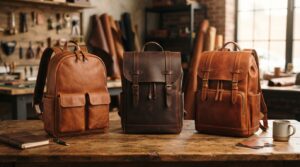
Rugged, rustic-style backpacks the kind with visible stitching, brass hardware, and a worn-in aesthetic are almost always made from full-grain leather. This style leans into the natural imperfections and irregular texture, since the whole design philosophy is built around the leather aging and telling a story. If you’re drawn to a vintage, heritage-inspired look, full-grain is typically the better match stylistically as well as functionally.
Sleek, minimalist backpacks with clean lines, structured panels, and a more corporate or urban aesthetic often use top-grain leather. The smoother, more consistent surface complements sharper design lines and tends to photograph and present more uniformly, which matters for buyers who want their bag to look polished for professional settings.
Hybrid and travel backpacks, which need to balance durability with weight and flexibility for features like expandable compartments or padded laptop sleeves, sometimes use top-grain leather for structural panels while incorporating full-grain leather accents on high-wear areas like the base, straps, or handles. This hybrid construction approach lets manufacturers optimize both cost and performance.
When browsing a specialized retailer, it’s worth checking not just the grain type but which parts of the bag use which material, since some backpacks blend grades strategically rather than using a single type throughout.
Making a Confident Purchase Decision
Ultimately, the best way to make a confident choice is to combine what you’ve learned here with careful research into the specific backpack you’re considering. Look closely at product photos for texture and grain consistency, read the full material description rather than skimming just the headline, and don’t hesitate to reach out to a retailer’s customer service team if the grain type isn’t clearly listed.
A genuine leather backpack, whether full-grain or top-grain, represents a meaningful investment compared to synthetic alternatives. Taking a few extra minutes to understand exactly what you’re buying ensures that investment pays off in the form of a bag that fits your lifestyle, holds up to daily use and ages the way you want it to.
Final Thoughts
Choosing between a full-grain and top-grain leather backpack ultimately comes down to how you want your bag to look, feel, and age over time. Full-grain leather offers unmatched durability, character and long-term value for those willing to invest and wait for a patina to develop. Top-grain leather offers a more accessible price point, a consistently polished look, and a lighter, more flexible carry for everyday practicality.
Both are legitimate, high-quality choices the “best” one is simply the one that matches your lifestyle, budget, and aesthetic preferences. Whichever you choose, understanding the difference means you’ll never have to second-guess a leather product description again.
If you’re ready to start browsing, exploring a dedicated leather goods retailer like leathermingle.shop is a great next step sites that specialize in leather backpacks tend to offer clearer material specifications, making it easier to identify exactly whether you’re looking at full-grain or top-grain construction before you buy.
Frequently Asked Questions
Is top-grain leather considered “fake” leather?
No. Top-grain leather is 100% genuine animal hide. It differs from full-grain only in that its surface has been sanded and refinished. This is entirely different from bonded leather (made from scraps and adhesive) or faux/PU leather (a synthetic plastic material designed to mimic leather’s appearance).
Will a full-grain leather backpack get better with age, or just look worn out?
When cared for properly, full-grain leather typically improves in appearance over time. The patina that develops is generally considered a desirable trait rather than a sign of deterioration, similar to how raw denim or a well-used baseball glove becomes more attractive with wear.
Can top-grain leather develop a patina too?
To a lesser extent, yes, but because the surface has been treated and often coated with a protective finish, the transformation is far less dramatic than what you’d see with full-grain leather. Top-grain leather tends to stay closer to its original appearance throughout its lifespan.
Is one type of leather more waterproof than the other?
Neither is fully waterproof by default, but top-grain leather’s applied finish often provides a bit more resistance to light moisture and staining right out of the box. Full-grain leather can be treated with waterproofing sprays or conditioners to improve its resistance, but it remains more porous by nature.
How can I verify the grain type before buying online?
Look for detailed product descriptions that specify the grain type explicitly, check customer reviews and photos for texture close-ups, and favor retailers that specialize in leather goods, since they’re more likely to provide accurate, detailed material information than general marketplaces selling a wide range of unrelated products a site like leathermingle.shop is a good example of this kind of specialized listing.
Does the type of leather affect the smell of the backpack?
Yes, subtly. Full-grain, vegetable-tanned leather tends to have a deeper, more traditional “leather smell” that many people associate with high-quality goods. Top-grain leather, especially when chrome-tanned and finished, often has a milder scent due to the additional processing and coatings applied during manufacturing.


About author

Add comment