
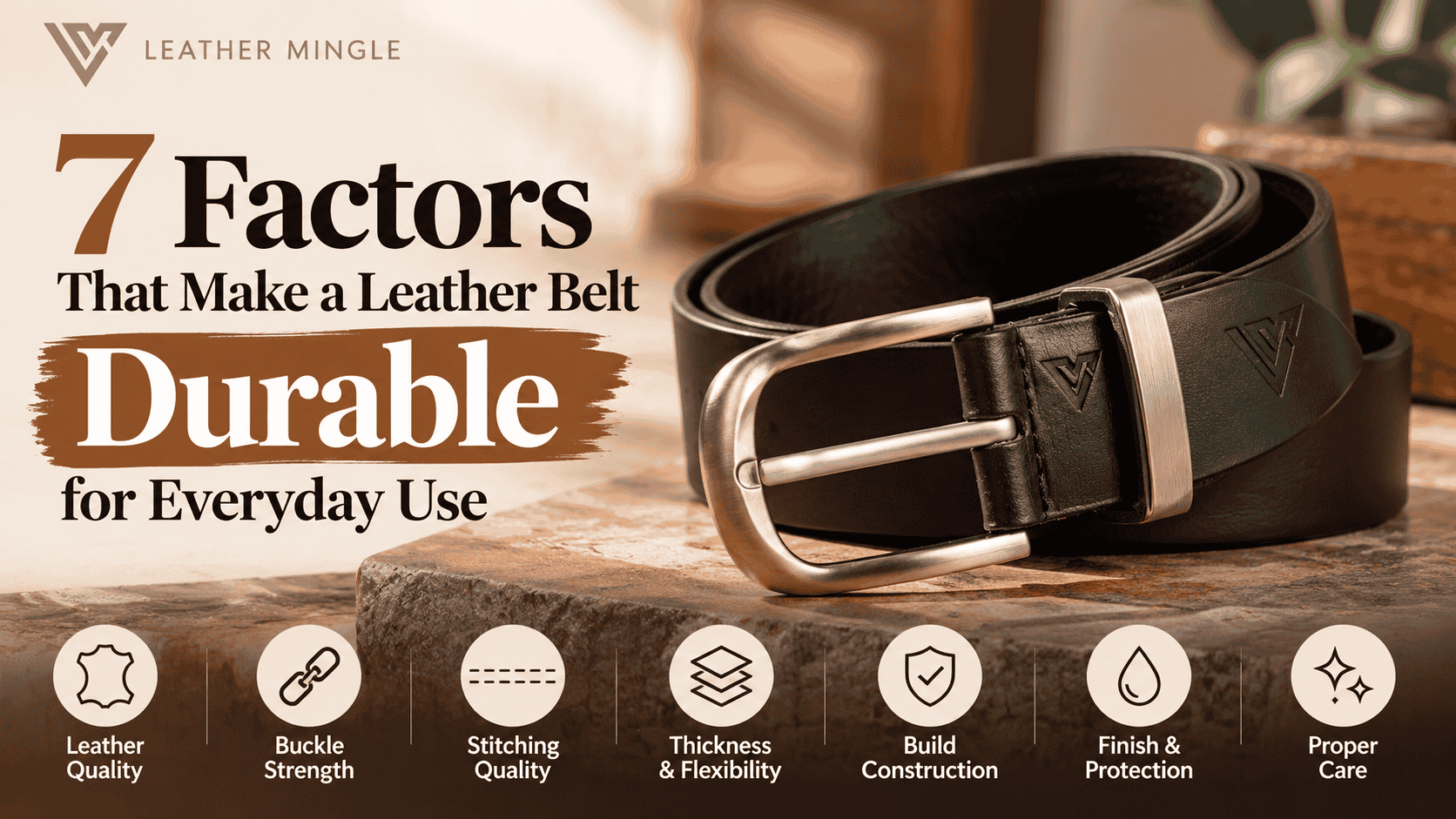
7 Factors That Make a Leather Belt Durable for Everyday Use
A belt is one of the hardest-working items in your wardrobe. It holds up your pants, takes daily stress at the buckle, and bends thousands of times each year. Yet many people buy a belt based only on looks, then wonder why it cracks or stretches after a few months.
A truly durable leather belt can last for ten years or more. The secret is knowing what to look for. In this guide, you will learn the seven key factors that make a leather belt strong enough for everyday use.
1. The Type of Leather
Not all leather is equal. The grade of the hide is the biggest factor in how long a belt will last.
Full grain leather is the top choice. It uses the outer layer of the hide with all its natural fibers still intact. This layer is the strongest part of the animal skin. Full grain leather does not wear out easily, and it gets better with age, building a rich look called patina.
Top grain leather has the surface lightly sanded to remove flaws. It looks smooth and even, but it is a little less strong than full grain.
Genuine leather sounds good, but it is actually a lower grade. It is made from the weaker inner layers of the hide, often glued and coated to look nice. These belts tend to peel and crack sooner.
Bonded leather is made from scraps of leather glued together. It is the least durable and should be avoided for daily wear.
If you want a belt that lasts, look for the words “full grain” on the label. You can explore full grain leather belts at Leather Mingle to see what quality looks like.
2. The Thickness of the Belt
Thickness gives a belt its strength. A belt that is too thin will stretch, curl, and fold at the buckle. A belt that is thick enough will hold its shape for years.
Leather thickness is measured in ounces. One ounce equals about 1/64 of an inch. Here is a simple guide:
- 7 to 8 oz (about 3 mm): Good for dress belts. Slim and flexible, but still strong.
- 9 to 10 oz (about 4 mm): Great for everyday belts. A solid balance of comfort and strength.
- 10 to 13 oz (about 5 mm): Best for heavy-duty use, work belts, and gun belts.
For daily wear, a belt around 9 to 10 ounces is a smart choice. It is sturdy enough to last, but not so stiff that it feels uncomfortable.
3. The Tanning Method
Tanning is the process that turns raw animal hide into usable leather. The method used changes how the leather feels and how long it lasts.
Vegetable tanning uses natural materials like tree bark. It takes longer, but it creates firm, strong leather that ages beautifully. Vegetable-tanned belts develop a deep, warm color over time.
Chrome tanning uses mineral salts. It is faster and makes softer, more flexible leather that resists water and heat better.
Both methods can produce durable belts when done well. The key is a tannery that takes its time and does not rush the process. Poor tanning leaves leather weak, dry, and likely to crack.
4. Strong, Quality Stitching
Many belts are not just one flat strip of leather. Some are folded, layered, or stitched at the buckle end. These stitched areas take a lot of stress, so they must be made well.
Here is what good stitching looks like:
- Tight, even stitches with no gaps or loose threads
- Strong thread, such as nylon or waxed polyester, which resists wear
- Reinforced stress points, especially where the belt wraps around the buckle
- Straight lines that follow the edge of the belt evenly
If you see crooked stitches or loose ends in a store, put the belt back. Poor stitching is often the first place a belt fails.
5. The Buckle and Hardware
A great leather strap is useless if the buckle breaks. The hardware takes the most pressure of any part of the belt, so it needs to be tough.
Look for buckles made from:
- Solid brass: Strong, long-lasting, and resistant to rust
- Stainless steel: Very tough and does not rust or tarnish
- Zinc alloy (only if high quality): Cheaper, but can bend or snap if poorly made
Avoid buckles that feel light, hollow, or thin. Also check for plated finishes, because cheap plating can flake off and show a dull metal underneath.
The way the buckle attaches to the strap matters too. Belts held with screws or strong rivets last longer than those held with weak snaps or only glue.
6. Edge Finishing and Surface Treatment
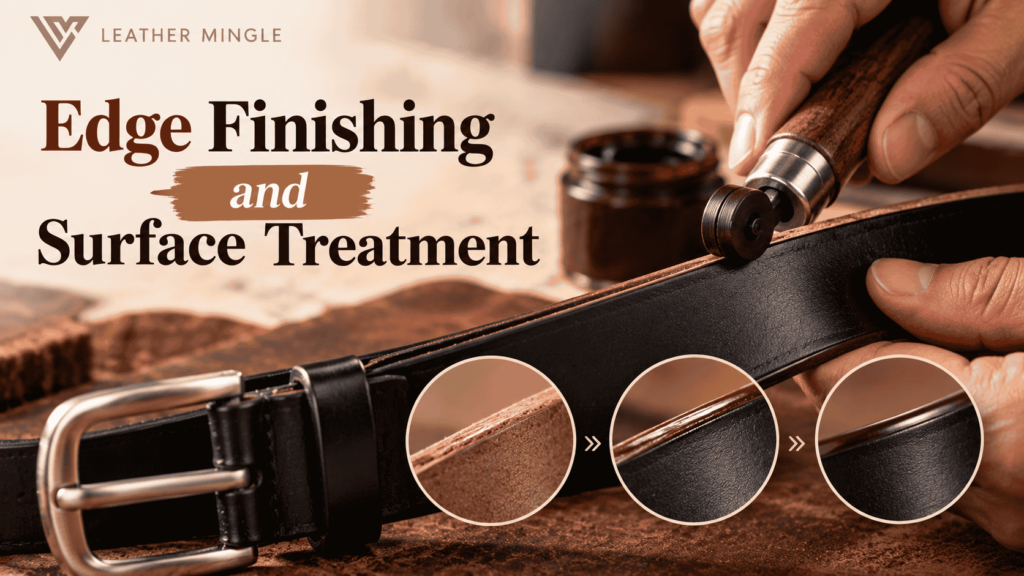
The edges of a belt are easy to overlook, but they play a big role in durability. Raw, unfinished edges can fray, split, and soak up water.
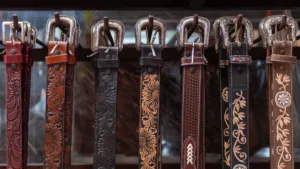
A well-made belt will have burnished edges. This means the edges are sanded, polished, and sealed so they look smooth and glossy. Sealed edges resist moisture and stay neat for much longer.
The surface also needs protection. Good belts are treated with natural oils, waxes, or light finishes that keep the leather soft and help it resist sweat, rain, and dirt. A belt with no treatment at all can dry out quickly.
Watch out for belts with a thick, plastic-like coating. It may look shiny, but it can crack and peel as the belt bends.
7. Proper Care and Daily Habits
Even the best belt needs a little care. How you treat your belt every day can add years to its life.
Follow these easy habits:
- Rotate your belts. Wearing the same belt every day wears out the same holes and stress points. Switching between two belts lets each one rest.
- Hang or roll it. Store your belt hanging from the buckle or loosely rolled. Do not fold it or leave it crumpled in a drawer.
- Keep it dry. If your belt gets wet, let it air dry naturally. Never use a hair dryer or place it near a heater, because heat makes leather stiff and brittle.
- Clean it gently. Wipe off dust and dirt with a soft, damp cloth.
- Condition it. Apply a quality leather conditioner every few months to keep the leather soft and prevent cracks.
- Wear it on the right hole. Using the same middle hole most of the time helps avoid stretching and strain on the holes at the ends.
A little care takes only a few minutes, but it can double the life of your belt. For more care tips and ideas, visit the Leather Mingle blog and shop.
Quick Checklist: How to Spot a Durable Belt
Use this list when you shop:
- Made from full grain or top grain leather
- Thickness of at least 9 oz for everyday wear
- Tanned with care, using vegetable or chrome methods
- Even, tight stitching
- Solid brass or stainless steel buckle
- Smooth, sealed edges
- Comes with clear care instructions
If a belt checks most of these boxes, it is likely built to last.
Why Buying Quality Saves Money
A cheap belt may cost very little at first, but it often needs replacing within a year. Over time, you could spend more on several weak belts than on one excellent belt.
A quality leather belt is an investment. It looks better, feels better, and holds up through work, travel, and daily life. As it ages, it also gains character, with a soft shine and a color that is unique to you. Shopping from a brand that focuses on handcrafted leather goods, such as Leather Mingle, makes it easier to find belts made with these durable details.
Final Thoughts
A durable leather belt is not an accident. It comes from good leather, the right thickness, careful tanning, strong stitching, tough hardware, smooth edges, and simple daily care. When you know what to look for, you can avoid weak belts and choose one that serves you for years.
Take your time, check the details, and invest in quality. Your belt will thank you with comfort, style, and strength every day.
Ready to find a belt built to last? Visit Leather Mingle and explore handcrafted leather belts made for everyday life.
Frequently Asked Questions (FAQs)
What is the most durable type of leather for a belt?
Full grain leather is the most durable. It keeps the strongest layer of the hide and ages well over time.
How long should a good leather belt last?
With good care, a high-quality leather belt can last five to ten years or even longer. Cheaper belts may break down in a year or less.
How thick should a leather belt be for everyday use?
Most people do well with a belt that is 9 to 10 ounces, or about 4 mm thick. Thinner belts, around 7 to 8 ounces, work well for dress wear.
Is genuine leather the same as full grain leather?
No. “Genuine leather” is a lower grade made from weaker parts of the hide. Full grain leather is much stronger and longer lasting.
How do I stop my leather belt from cracking?
Keep it away from heat, clean it gently, and apply leather conditioner every few months. Do not let it stay wet for long periods.
Can I wear the same belt every day?
You can, but it will wear out faster. Rotating between two belts helps each one last longer.
About author

Add comment