
The Western Tooled Leather Belt Guide: Cowboy Belts, Buckles, Sizing and Care
A western tooled leather belt, often called a cowboy belt, is a full-grain leather belt hand-carved with traditional patterns like floral, Sheridan, and basket weave. Order it one to two inches larger than your pant waist so the buckle prong sits in the middle hole. Choose full-grain vegetable-tanned leather for durability, pick a buckle style that matches your look, and condition it twice a year to keep it for decades.
What Is a Western Tooled Leather Belt?
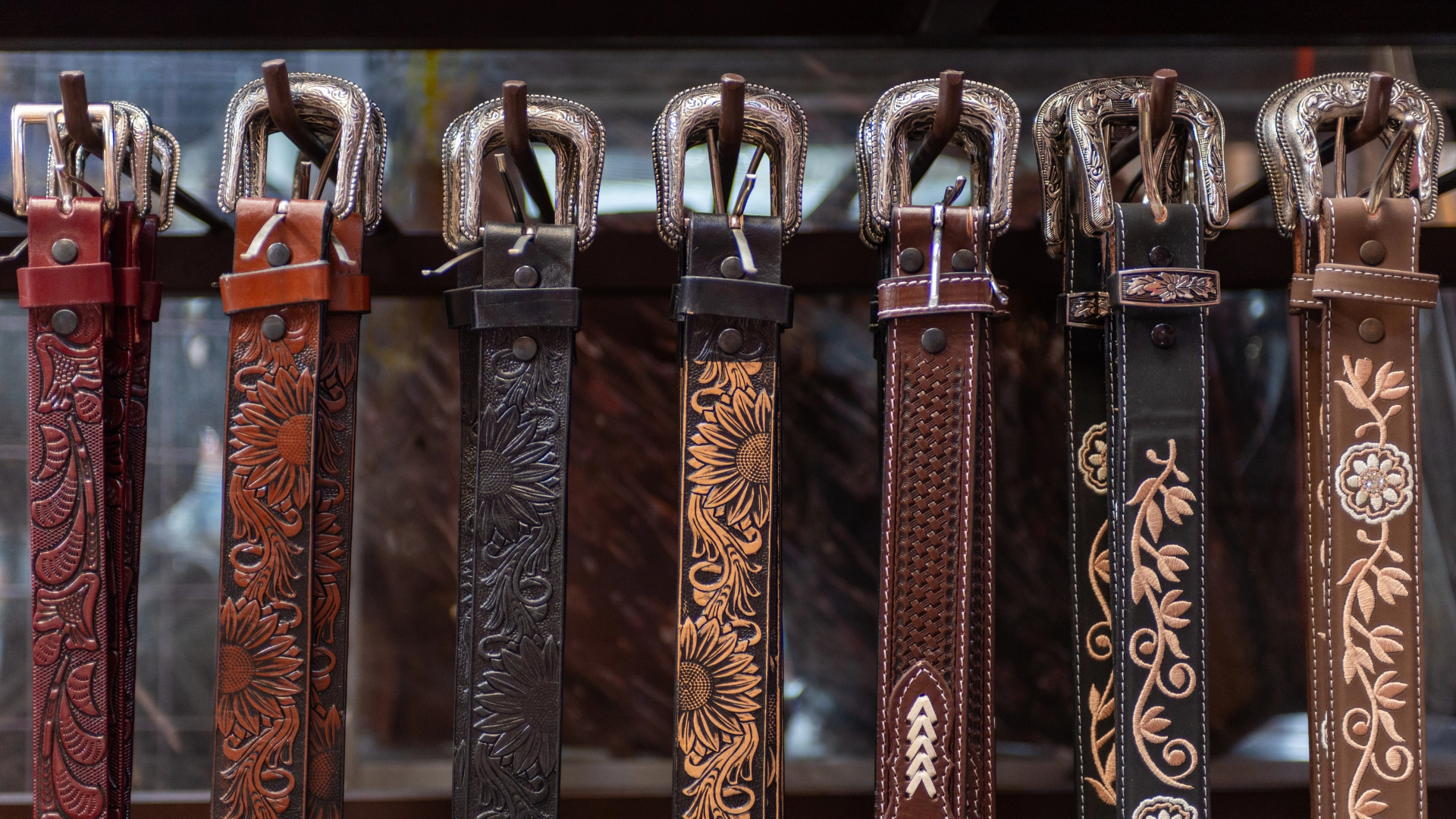
A western tooled leather belt is a belt carved by hand with decorative patterns pressed into the leather surface. People also call it a cowboy belt, and the two terms describe the same thing: a wide, sturdy leather belt that carries western styling and usually pairs with a statement buckle. The tooling is the artwork stamped and carved into the belt, and it is what separates a true western belt from a plain strap.
The leather underneath the tooling matters as much as the pattern on top. A real cowboy belt is made from full-grain vegetable-tanned leather because that is the only leather firm and dense enough to hold a deep, crisp tooled pattern for years. You wear a western belt with jeans, boots, and western shirts, and a good one becomes the piece that pulls the whole outfit together. Our collection of western leather belts is built on this full-grain foundation so the tooling stays sharp and the belt lasts.
Western Belt vs Cowboy Belt vs Dress Belt: What Is the Difference?
Buyers often ask whether a western belt, a cowboy belt, and a dress belt are different things. A western belt and a cowboy belt are the same product under two names, both wide and tooled with a statement buckle. A dress belt is a different category entirely, and confusing the two leads to the wrong purchase. The differences below explain why a cowboy belt is built and sized so differently from the thin belt you wear with a suit.
A cowboy belt runs wider, usually 1.5 inches, to match jeans loops and to carry the weight of a heavy buckle. It uses thicker, firmer leather so the tooling holds and the belt does not roll. The buckle is often interchangeable and meant to be seen. A dress belt runs narrower at around 1.25 inches, uses thinner leather, and carries a small discreet buckle that disappears under a jacket. If you want a belt for jeans and boots, you want a western belt, not a dress belt. For the thinner formal option, see our standard leather belt collection instead.
How Do You Size a Cowboy Belt Correctly?
Sizing is the single most common mistake when buying a cowboy belt, because western belts size differently from the pant-waist number you might expect. The rule is simple once you know it: order your western belt one to two inches larger than your pant waist, so the buckle prong lands in the middle hole of the belt. The middle hole is the target because it leaves room to adjust in both directions as the leather settles and as your fit changes.
| Your Pant Waist (inches) | Order Belt Size (inches) | Buckle Hole at Fit |
| 30 | 32 | Middle hole |
| 32 | 34 | Middle hole |
| 34 | 36 | Middle hole |
| 36 | 38 | Middle hole |
| 38 | 40 | Middle hole |
| 40 | 42 | Middle hole |
If you are between sizes, or if you wear the belt over thicker jeans or with a tucked shirt, size up rather than down. The same rule applies to men and women, since the sizing follows waist measurement and not gender. When the buckle prong sits in the middle hole, you have the right belt, and the belt will look balanced rather than stretched to the first or last hole.
The Traditional Western Tooling Patterns Explained
The tooling pattern is the personality of a cowboy belt and a handful of traditional designs carry the most meaning in western style. Knowing the patterns helps you choose a belt that matches your taste and the occasion, whether you want a loud statement piece or a refined heritage look. The table below covers the patterns you will see most often on quality western belts.
| Pattern | Look | Best For |
| Floral | Flowing carved flowers and leaves | Classic western, all-occasion statement |
| Sheridan | Tight, intricate scrollwork; the gold standard | Refined, heritage, show-quality belts |
| Basketweave | Repeating woven stamp pattern | Understated, ranch and workwear style |
| Oak leaf and acorn | Earthy carved leaves and acorns | Rustic, outdoor, traditional ranch look |
| Geometric | Repeating stamped shapes and borders | Clean, modern western, subtle styling |
| Sunflower | Bold carved sunflower motifs | Bright, eye-catching statement belts |
Floral and Sheridan styles read as dressier and more decorative, while basketweave and geometric read as understated and everyday. There is no wrong choice, only the look you want to carry. A bold floral or sunflower belt makes a statement at an event, while a basketweave belt disappears into daily ranch and workwear without drawing attention.
Cowboy Belt Buckles: Types and How to Choose
The buckle is half the personality of a cowboy belt, and western belts are built so the buckle can be seen and often swapped. Understanding the common buckle styles helps you build a belt that fits the occasion, because one belt strap can carry several buckles across different looks. Many western buckles are interchangeable, attaching with snaps so you can change the buckle without changing the belt.
The trophy buckle is the large, ornate buckle associated with rodeo and show, often engraved with silver and gold detail. The ranger set pairs a buckle with a matching keeper and tip for a coordinated three-piece look. The standard interchangeable buckle snaps on and off so one belt can carry a work buckle by day and a dress buckle by night. When choosing, match the buckle weight and finish to how you will wear the belt: a heavy trophy buckle for statements and events, a simpler buckle for daily wear. Browse buckle-ready western belts in our cowboy belt collection.
Are Cowboy Belts Different for Men and Women?
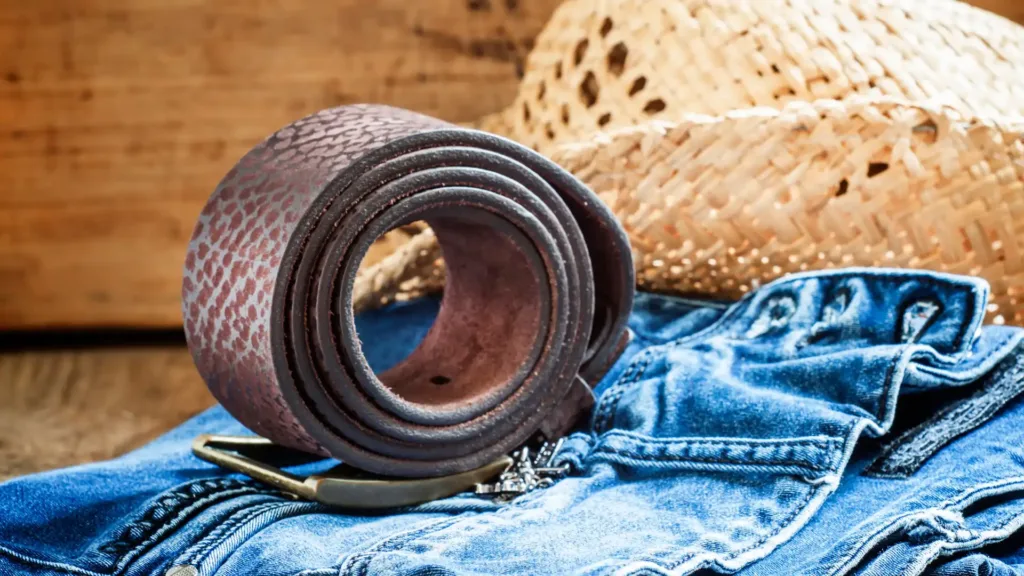
Cowboy belts work for both men and women, and the core belt is the same product sized by waist measurement rather than by gender. The differences are matters of width, buckle choice, and tooling style rather than a fundamentally different belt. A cowgirl belt and a men’s cowboy belt are built on the same full-grain leather and the same sizing rule, which is why the sizing guide above applies equally to everyone.
Women often choose slightly narrower straps, more delicate floral or sunflower tooling, and smaller decorative buckles, while men often choose wider straps, basketweave or bold floral tooling, and heavier trophy buckles. These are preferences, not rules. A woman who wants a bold trophy buckle and a wide basketweave belt should buy exactly that, and a man who wants fine floral tooling should do the same. Choose the belt that matches your style, and use the waist-based sizing to get the fit right regardless of which section you shop.
What Leather Makes the Best Western Belt?
The best western belt starts with full-grain vegetable-tanned leather, and this is not a detail you can compromise on. Full-grain leather keeps the strongest top layer of the hide with the natural fibres intact, which is what lets a tooled pattern hold its depth for decades. Vegetable tanning makes the leather firm and dense enough to carve, which is why genuine tooled belts are always vegetable-tanned rather than soft chrome-tanned leather that cannot hold a deep stamp.
Avoid belts labelled only as genuine leather or bonded leather, because those lower grades are too thin and too soft to hold tooling, and they crack at the fold within a year or two. A quality western belt uses full-grain leather between roughly 8 and 10 ounces in thickness, which gives it the body to carry a heavy buckle without rolling. The leather quality also determines how the belt ages, with full-grain developing a rich patina while lower grades simply wear out. You can read more about how leather grading and responsible tanning work through the Leather Working Group, the global body that audits leather quality and environmental standards.
Hand-Tooled vs Machine-Pressed: How to Tell Real Quality
Not every tooled belt is genuinely hand-tooled, and the difference shows in the price and the longevity. Hand-tooled belts are carved with a swivel knife and stamped by a craftsperson, which gives the pattern depth, shadow, and slight natural variation. Machine-pressed belts have a pattern stamped in one press, which looks flatter, more uniform, and wears smooth faster. Knowing how to tell them apart protects you from paying a craft price for a pressed belt.
Look at the depth and shadow of the cuts, because hand tooling creates real three-dimensional relief while pressing stays shallow. Check the back of the belt, where hand-tooled leather shows the full-grain underside and pressed belts often hide a bonded or split backing. Run your finger across the pattern, since hand tooling has crisp carved edges and pressing feels rounded. The price reality is honest here: genuine hand-tooled belts cost more because they take hours of skilled work, and that work is exactly what you are paying for. Learn more about how our pieces are made on our guide to our handcrafted leather creations.
How Do You Care for a Tooled Leather Belt?
A western tooled belt is built to last decades, and a simple care routine keeps it looking its best across that life. The tooling and the full-grain leather both reward light, regular maintenance far more than occasional heavy treatment. Three habits cover almost everything a cowboy belt needs to age beautifully rather than dry out and crack.
Wipe the belt with a dry cloth after wear to clear dust from the carved pattern, since grit settles into tooling and dulls it over time. Condition the leather twice a year with a quality leather conditioner, working a small amount into the tooled surface to keep the fibres supple. Store the belt rolled or hung flat rather than folded, and keep it away from direct heat and sunlight that dry leather out. For more on wearing and pairing your belt, our guide on how to style western leather belts covers the outfits that suit each pattern and buckle.
Common Mistakes When Buying a Western Belt
A few avoidable mistakes account for most disappointing cowboy belt purchases, and each one is easy to sidestep once you know it. The patterns repeat across buyers who shop on looks alone without checking the fundamentals.
- Ordering the pant-waist size instead of sizing up one to two inches for the middle-hole fit.
- Buying a belt labelled only as genuine or bonded leather, which is too soft to hold tooling and cracks early.
- Mistaking a machine-pressed belt for hand-tooled and paying a craft price for a pressed pattern.
- Choosing a buckle far too heavy or too ornate for how the belt will actually be worn day to day.
- Skipping conditioning, which lets the full-grain leather dry out and the tooling lose its depth.
The most common and most fixable mistake is the sizing one, because a belt ordered at pant-waist size sits too tight and buckles at the first hole rather than the middle. Use the waist-plus-two rule, confirm the leather is full-grain vegetable-tanned, and the rest of the buying decision becomes a matter of taste in pattern and buckle.
Why Choose a Leather Mingle Western Belt
Leather Mingle builds western tooled belts from full-grain leather with traditional tooling patterns, sized on the waist-plus-two rule so the buckle lands where it should. Every western belt is made to carry a statement buckle and to age into a piece you keep for years rather than replace each season. We focus on the leather grade and the tooling depth first, because those are what separate a belt you wear for a decade from one you retire in a season.
If you want a specific pattern, a particular buckle pairing, or guidance on sizing before you order, reach out through our contact page and we will help you choose the right belt for your style and fit.
Final Thoughts
A western tooled leather belt is one of those pieces you buy once and wear for years, as long as you get the fundamentals right. Size up one to two inches from your pant waist for the middle-hole fit, insist on full-grain vegetable-tanned leather that holds its tooling, pick a pattern and buckle that match your style and condition the belt twice a year. Get those right and a cowboy belt becomes the piece that finishes every outfit and ages better with every wear.
Ready to find yours? Explore our full range of western tooled leather belts for men and women, built on full-grain leather and traditional tooling.
Frequently Asked Questions
What size cowboy belt should I order?
Order your western belt one to two inches larger than your pant waist, so the buckle prong sits in the middle hole. If your pant waist is 34 inches, order a 36-inch belt. The same rule applies to men and women, since western belt sizing follows waist measurement rather than gender. When between sizes, size up.
What is the difference between a western belt and a dress belt?
A western belt, or cowboy belt, is wider at around 1.5 inches, uses thicker, firmer leather, carries tooling, and pairs with a statement buckle for jeans and boots. A dress belt is narrower at around 1.25 inches, uses thinner leather, and has a small, discreet buckle for formal wear under a jacket.
Are cowboy belts the same for men and women?
The core belt is the same for men and women, sized by waist measurement on the same full-grain leather. Differences are matters of preference: women often choose narrower straps, floral tooling, and smaller buckles, while men often choose wider straps and heavier buckles. Choose by style, and size by waist.
What leather is best for a western tooled belt?
Full-grain vegetable-tanned leather is best, because it is the only leather firm and dense enough to hold a deep tooled pattern for years. Avoid genuine or bonded leather, which is too soft for tooling and crack early. A quality western belt uses full-grain leather around 8 to 10 ounces thick.
Can I change the buckle on a cowboy belt?
Many western belts use interchangeable buckles that snap on and off, so one belt strap can carry several buckles. This lets you switch between a work buckle and a dress buckle on the same belt. Check that the belt has snap fasteners at the buckle end if interchangeable buckles matter to you.
How do I care for a tooled leather belt?
Wipe the belt with a dry cloth after wear to clear grit from the tooling, condition the leather twice a year with a quality leather conditioner, and store it rolled or hung flat away from heat and sunlight. This simple routine keeps the full-grain leather supple and the tooled pattern sharp for decades.
What western tooling patterns are most popular?
Floral and Sheridan scrollwork are the most decorative and sought-after patterns, while basketweave and geometric designs are popular for understated everyday wear. Sunflower and oak-leaf patterns suit buyers who want a bolder or more rustic look. The right pattern depends on whether you want a statement belt or a daily one.

About author

Add comment