
Best Leather Aprons for Woodworking, BBQ and Blacksmithing
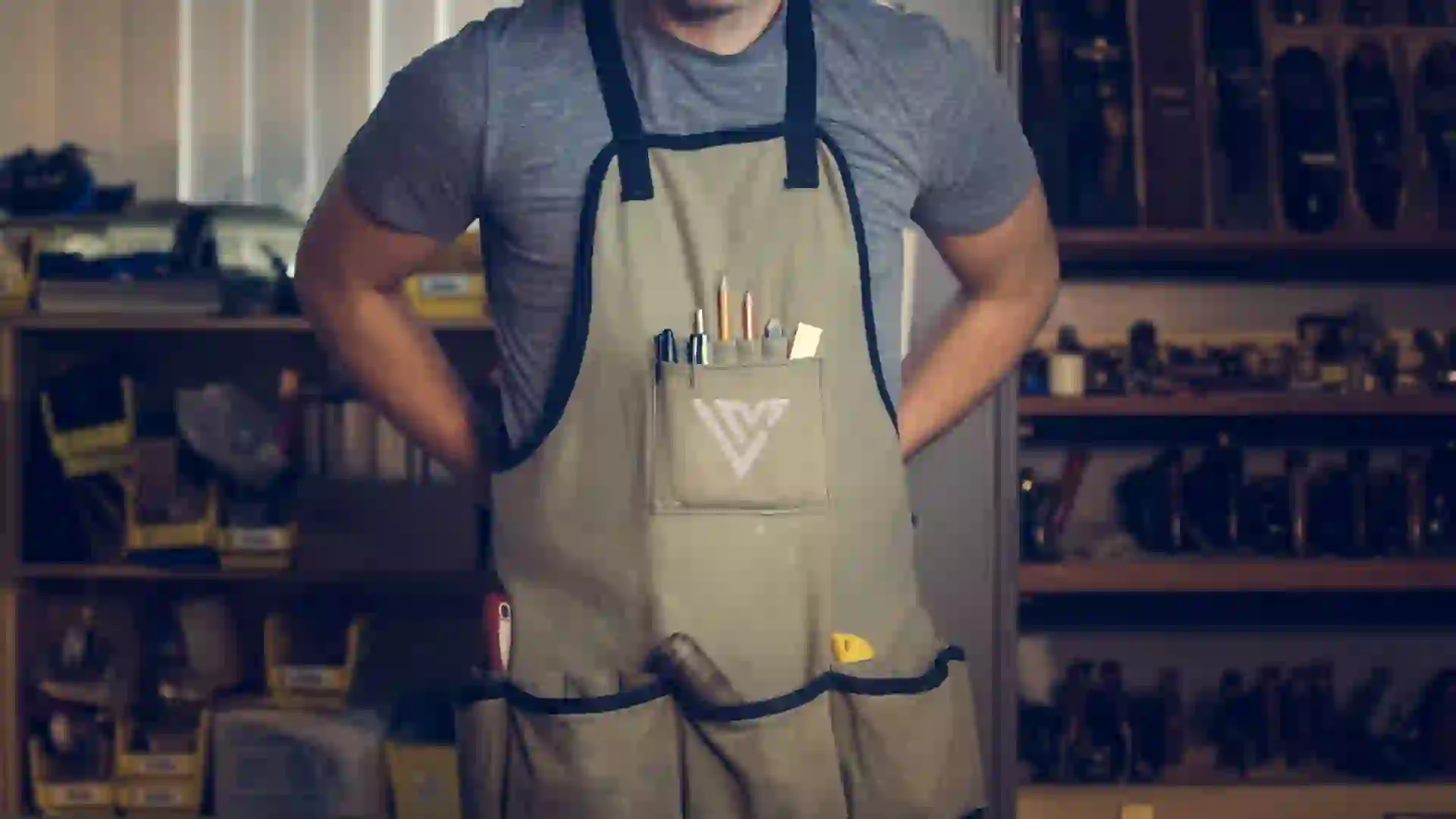
The best leather apron depends on the heat and hazard of the task. Woodworking calls for a lighter 4 to 6 oz full-grain apron that moves with you and shrugs off splinters and glue. BBQ and grilling need a 5 to 7 oz apron that resists grease, heat, and flare-ups. Blacksmithing and forge work demand the heaviest 7 to 9 oz full-grain leather for spark and radiant-heat protection. Across all three, full-grain leather, cross-back straps, and riveted stress points separate an apron that lasts decades from one that fails in a season.
What Makes a Good Leather Apron for Heavy Work?
A good leather apron for heavy work combines full-grain leather, the right thickness for the task, and hardware built to survive daily abuse. Full-grain is the top layer of the hide with its natural grain intact, which makes it the most durable and abrasion-resistant grade for a working apron. The thickness, measured in ounces, decides how much heat and impact the apron absorbs. The straps and rivets decide whether the apron survives years of being pulled on and off. Get these three right and the apron becomes a tool that outlasts the projects you buy it for. Browse the full leather apron collection to see how grade and weight differ across use cases.
The difference between a work apron and a decorative one shows up in the details. A real working apron has riveted or bar-tacked stress points at the strap joints, where ordinary stitching tears out under load. It has full chest-to-thigh coverage so sparks, sawdust, or grease never reach your clothes. It uses solid brass or steel hardware that will not bend when you adjust it with one hand mid-task. These features cost more up front and pay back across years of use, which is the core trade every serious maker weighs before buying.
Why Choose Leather Over Fabric or Canvas for These Tasks?
Leather beats fabric and canvas for woodworking, BBQ, and blacksmithing because it resists heat, sparks, and abrasion that shred lighter materials. Cotton and canvas aprons char or catch when a forge spark or a grill flare-up lands on them, while full-grain leather chars on the surface and self-extinguishes rather than burning through. Leather also blocks the radiant heat of a forge or grill far better than a thin fabric layer. For tasks involving heat or flying debris, guidance on protective apparel underlines why a dense, flame-resistant barrier like leather matters, a point detailed by the National Fire Protection Association in its protective-equipment standards.
Durability is the second reason makers move to leather and never go back. A canvas apron frays at the pockets and straps within a year of hard use, while a full-grain leather apron develops a patina and keeps working for a decade or more. Leather also molds to your body over time, becoming more comfortable as it ages rather than wearing out. The honest trade-off is weight and price: leather is heavier on the shoulders and costs more than canvas, which is why cross-back straps that spread the load matter so much on a leather apron.
Which Leather Apron Is Best for Woodworking?
The best leather apron for woodworking is a 4 to 6 oz full-grain apron with deep tool pockets and freedom of movement at the shoulders. Woodworking does not involve open flame, so the priority shifts from heat resistance to mobility, tool storage, and protection against splinters, chisels, and glue. A mid-weight apron in this range stays light enough for a full day at the bench while still stopping a dropped gouge or a smear of finish from reaching your clothes. Look for an apron with a chest pocket sized for a pencil and rule, plus lower pockets deep enough to hold chisels point-down safely.
Fit and pocket layout make or break a woodworking apron. The straps should cross at the back so a day of leaning over the bench does not strain your neck, and the hem should sit at mid-thigh so you can crouch to a low clamp without the apron riding up. The Leather Mingle leather work apron is cut for exactly this kind of bench work, with full-grain leather that breaks in to your movement over the first few weeks of use.
What Leather Apron Is Best for BBQ and Grilling?

The best leather apron for BBQ and grilling is a 5 to 7 oz full-grain apron that resists grease, radiant heat, and the occasional flare-up. Grilling exposes the apron to splattering fat, smoke, and sudden bursts of flame, so the leather needs enough body to block heat without stiffening into a board. A mid-to-heavy weight in this range shrugs off grease stains that would ruin a cotton apron and wipes clean with a damp cloth. Full coverage from chest to thigh keeps sparks and hot grease off your clothes when you open a hot lid or move coals.
Comfort over a long cook session is the deciding factor for BBQ. A grill master stands for hours, so cross-back straps that spread the weight beat a single neck loop that digs in by the third rack of ribs. Towel loops and a thermometer pocket turn the apron into a station you wear. The Leather Mingle leather butcher apron suits grilling and butchery alike, with grease-resistant full-grain leather and a cut built for long hours at the heat.
Which Leather Apron Is Best for Blacksmithing?
The best leather apron for blacksmithing is the heaviest grade you can comfortably wear, a 7 to 9 oz full-grain apron that stops sparks, scale, and radiant forge heat. Forge work throws hot scale and sparks constantly, and the radiant heat off an anvil station is far higher than a grill or a workbench, so blacksmithing demands the thickest leather of the three tasks. A heavy full-grain apron with full chest and thigh coverage is standard protective wear in the trade. The Artist-Blacksmith Association of North America treats a heavy leather apron as basic forge safety gear, a standard reflected across ABANA member guidance.
Coverage and fastening matter even more at the forge than the weight alone. The apron should reach from the collarbone to below the knee, because forge sparks travel and a short apron leaves your thighs exposed. Quick-release strap hardware lets you shed the apron fast if hot scale lodges against it. The Leather Mingle leather blacksmith apron is built in heavy full-grain leather with the long coverage and reinforced straps that forge work requires.
What Leather Weight and Thickness Do You Need?
Leather weight is measured in ounces, where each ounce equals roughly 0.4 millimetres of thickness, and the right weight rises with the heat and hazard of the task. A woodworking apron sits comfortably at 4 to 6 oz, a BBQ apron at 5 to 7 oz, and a blacksmithing apron at 7 to 9 oz or heavier. Going too light leaves you underprotected, while going too heavy tires your shoulders and limits movement. The table below maps weight to thickness and the task each range suits best.
| Leather Weight | Thickness | Best For | Trade-off |
| 4 to 5 oz | 1.6 to 2.0 mm | Light woodworking, crafting, barista | Light and flexible, less heat block |
| 5 to 6 oz | 2.0 to 2.4 mm | Woodworking, general shop work | Balanced weight and protection |
| 6 to 7 oz | 2.4 to 2.8 mm | BBQ, grilling, butchery | Grease and heat resistant, moderate weight |
| 7 to 9 oz | 2.8 to 3.6 mm | Blacksmithing, welding, forge work | Maximum protection, heaviest on shoulders |
Matching weight to task is the single most useful decision in buying a work apron. A common mistake is buying one heavy apron for every job, which leaves a woodworker sweating under forge-grade leather at the bench. Buying the weight that fits the task gives better comfort and protection for the money. For the full breakdown of fit, function, and features beyond weight, the Leather Mingle leather apron buying guide walks through every spec to check before you buy.
How Should a Leather Work Apron Fit?
A leather work apron should cover from the upper chest to mid-thigh or lower, with straps that adjust to your torso and spread weight across your back. Coverage is the protective core: too short an apron leaves your lap and thighs exposed to sparks, sawdust, or grease. The straps decide comfort over a long session, and cross-back straps consistently beat a single neck loop because they move the load off your neck and onto your shoulders and back. Adjustable buckles or quick-release hardware let one apron fit different body sizes and layers.
Pocket placement turns a well-fitted apron into a working station. Chest pockets hold pencils, rules, and thermometers, while lower pockets hold tools you reach for constantly. The pockets should sit where your hands naturally fall, not where they look good in a photo. A good apron also leaves room to move, so test that you can crouch, reach overhead, and turn without the leather binding. Fit is personal, so prioritize adjustability if more than one person will wear the apron.
How Do You Care for a Leather Work Apron?
You care for a leather work apron by wiping it clean after use, conditioning it a few times a year, and keeping it away from prolonged soaking and direct high heat. Full-grain leather is forgiving, but it dries out over time, especially near a forge or grill, so a periodic conditioning keeps it supple and stops it cracking at the fold lines. Wipe off sawdust, grease, or scale at the end of each session before it works into the grain. Never machine-wash a leather apron, and never dry it with direct heat, which stiffens and cracks the leather.
A simple care rhythm keeps a leather apron working for decades. Wipe after each use, condition with a leather conditioner every three to four months, and store the apron hanging rather than folded so it does not crease permanently. For grease-heavy BBQ or scale-heavy forge use, clean a little more often to keep the surface from building up residue. The Leather Mingle guide on how to clean and oil your leather apron covers the full routine step by step.
Why Leather Mingle for a Work Apron
Leather Mingle builds full-grain leather aprons cut for real working tasks, from the bench to the grill to the forge, rather than thin decorative pieces sold on looks. Each apron uses full-grain leather, riveted stress points, and cross-back straps designed to spread weight across a long work session. The range covers the weight grades each task needs, so a woodworker, a grill master, and a blacksmith each get an apron matched to their heat and hazard rather than a single compromise apron that fits none of them well. The complete lineup of handcrafted leather aprons spans every trade use case.
The practical way to choose is to start from your task and work backward to the weight and coverage. Decide whether you need woodworking mobility, BBQ grease resistance, or forge-grade protection, then pick the apron weight that matches. Leather Mingle aprons are made to break in to your body and last for years, which is what separates a tool from a costume. Questions about sizing or which weight fits your work can go through the contact page before you order.
Frequently Asked Questions
What is the best leather apron for woodworking?
The best leather apron for woodworking is a 4 to 6 oz full-grain apron with deep tool pockets and cross-back straps for all-day comfort. Woodworking has no open flame, so mobility and tool storage matter more than maximum heat resistance. Look for mid-thigh coverage, a chest pocket for a pencil and rule, and lower pockets deep enough to hold chisels safely.
What weight of leather is best for a blacksmith apron?
A blacksmith apron should use heavy 7 to 9 oz full-grain leather, roughly 2.8 to 3.6 mm thick, to stop sparks, hot scale, and radiant forge heat. Forge work throws more heat and debris than woodworking or grilling, so it needs the thickest leather of the three tasks. Full coverage from collarbone to below the knee and quick-release straps add essential safety at the forge.
Is a leather apron good for BBQ and grilling?
Yes, a leather apron is excellent for BBQ because it resists grease, radiant heat, and flare-ups that ruin cotton or canvas aprons. A 5 to 7 oz full-grain apron wipes clean of grease and blocks the heat of an open grill. Choose cross-back straps for comfort over a long cook and full chest-to-thigh coverage to keep splatter off your clothes.
Are leather aprons better than canvas aprons?
Leather aprons outlast and outprotect canvas aprons for heat and hazard tasks, though canvas is lighter and cheaper. Leather resists sparks, grease, and abrasion that fray canvas within a year, and it develops a patina and molds to your body over time. Canvas suits light, low-heat tasks, while leather is the better choice for woodworking, BBQ, and blacksmithing.
How do I stop my leather apron from cracking?
Stop a leather apron from cracking by conditioning it every three to four months and keeping it away from prolonged soaking and direct high heat. Full-grain leather dries out near a forge or grill, and dry leather cracks at the fold lines. Wipe off debris after each use, store the apron hanging rather than folded, and never dry it with direct heat.
What does ounce weight mean for leather aprons?
Ounce weight measures leather thickness, where each ounce equals roughly 0.4 millimetres. A 6 oz apron is about 2.4 mm thick. Higher ounce weights mean thicker, more protective, and heavier leather. Woodworking suits 4 to 6 oz, BBQ suits 5 to 7 oz, and blacksmithing suits 7 to 9 oz, so the right weight rises with the heat and hazard of the task.
Do leather aprons need breaking in?
Yes, full-grain leather aprons break in over the first few weeks of use, softening and molding to your body for a more comfortable fit. A new apron can feel stiff, which is normal for genuine full-grain leather. Wearing it regularly and conditioning it lightly speeds the break-in, after which the apron moves with you rather than against you.
Final Thoughts
The best leather apron is the one matched to your task, because woodworking, BBQ, and blacksmithing each demand a different weight and coverage. Reach for 4 to 6 oz full-grain for the bench, 5 to 7 oz for the grill, and 7 to 9 oz for the forge, and insist on full-grain leather, cross-back straps, and riveted stress points across all three. An apron built to the right spec stops being a purchase and becomes a tool that lasts decades and ages better with every use.
To match an apron to your trade and weight, compare the full range and shop our leather aprons built in full-grain leather for woodworking, BBQ, and blacksmithing.

About author


Add comment