
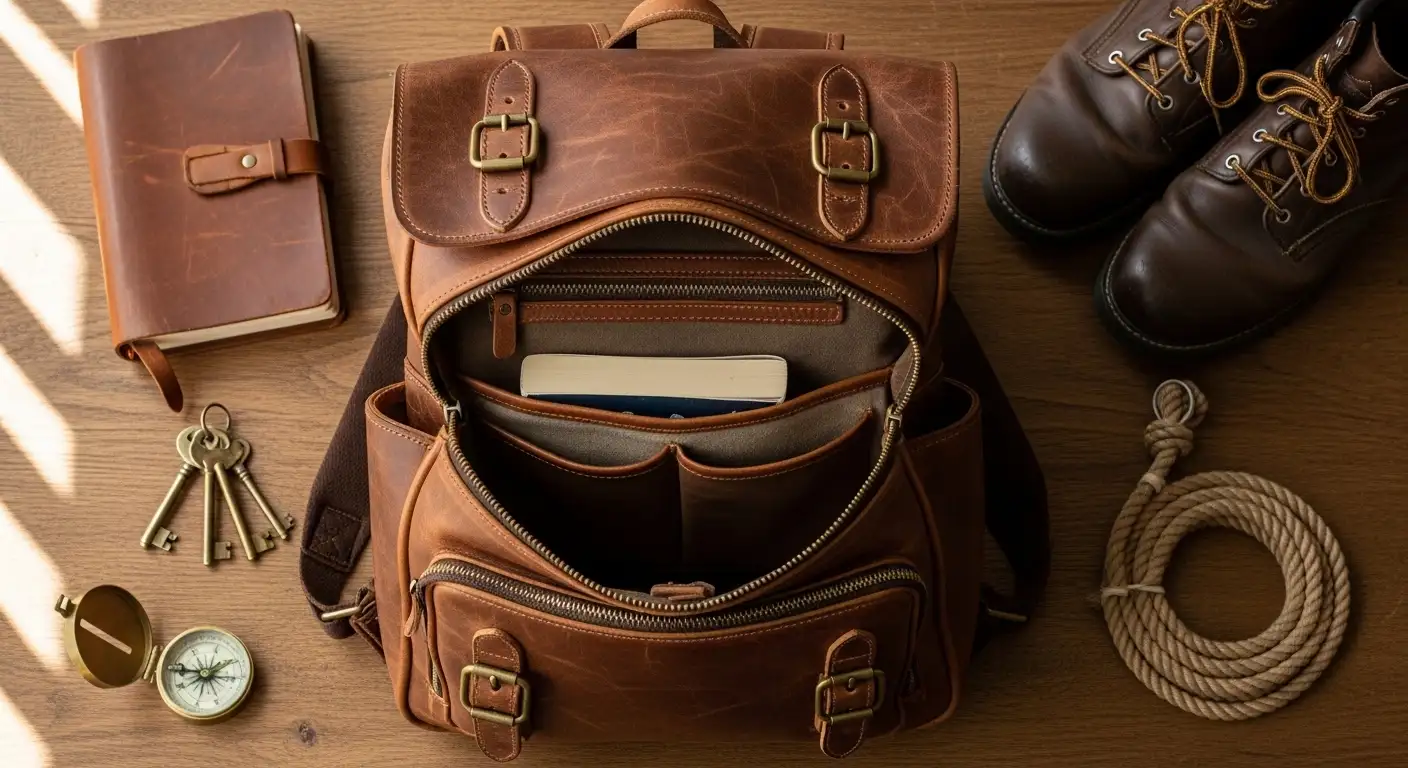
How to Choose a High-Quality Leather Backpack That Last Years
A high-quality leather backpack is a carry-all built to last 15 to 25 years with proper care. It combines premium material, solid construction, and functional design into a single everyday carry investment. The best options handle daily commutes, office use, and travel without wearing down.
What Makes a Leather Backpack High Quality?
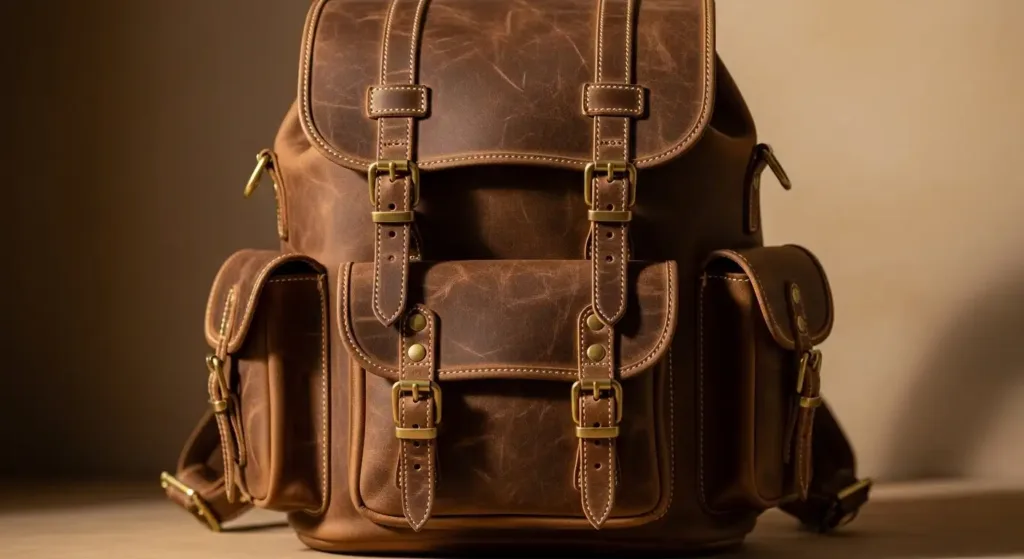
A high-quality leather backpack starts with the material and does not cut corners anywhere else. Quality shows up in the leather grade, stitching strength, hardware reliability, and overall structural integrity.
The three pillars are: premium leather (full-grain or top-grain), reinforced construction (double stitching, riveted joints), and durable hardware (brass or YKK zippers). When all three are done right, you get a bag that ages beautifully instead of falling apart.
Which Type of Leather Is Best for a Durable Leather Backpack?
The leather grade is the single most important decision you will make. Each type behaves differently over time.
| Leather Type | Durability | Aging | Best For |
| Full-grain leather | Highest | Develops patina | Long-term investment |
| Top-grain leather | High | Stays consistent | Daily office use |
| Genuine leather | Medium | Can peel | Budget buying |
| Bonded leather | Low | Cracks early | Avoid for backpacks |
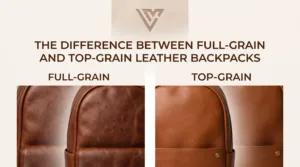
Full-grain leather is the strongest option. It uses the complete hide surface, which means it resists abrasion, handles moisture better, and develops a rich patina with age. A full-grain leather backpack bought today can still look great a decade from now.
Top-grain leather is sanded down slightly for a more uniform finish. It is still high quality and works well for professional and travel use. Genuine leather and bonded leather are lower grades that tend to crack or peel within a few years.
Vegetable-tanned leather is another quality signal. It uses natural tanning agents, produces firmer leather, and ages more gracefully than chrome-tanned alternatives.
Explore LeatherMingle’s full-grain leather backpack collection to see how this grade performs in real products.
How Do You Evaluate Leather Quality Before Buying?
You can check leather quality without any special tools. Look for these indicators:
Grain texture is your first clue. Full-grain leather shows natural marks, small variations, and an uneven surface. That is not a flaw, it is proof of authenticity. Perfectly uniform surfaces often signal corrected or bonded leather.
Leather thickness matters for durability. A backpack body panel should feel firm and slightly stiff, not floppy. Thicker leather handles daily stress without stretching out of shape.
Smell and feel also help. Real leather has a distinct, earthy smell. It feels warm and slightly textured. Synthetic or low-grade material often feels plastic-like and smells chemical.
The edge finish is a quick quality check. Premium leather bags have burnished, painted, or folded edges. Raw, unfinished edges suggest rushed production and shorter lifespan.
Why Does Construction and Stitching Matter So Much?
Even the best leather fails if the construction is weak. Stitching and joint reinforcement determine how long the bag holds up under real daily load.
Double stitching on shoulder straps, handles, and stress points is non-negotiable. Single-thread seams pull apart quickly when the bag carries weight over time. Look for tight, even stitches with no loose threads.
Riveted joints at high-stress points add mechanical strength that stitching alone cannot provide. The connection between shoulder straps and the bag body is the most common failure point, so check this area first.
Strap reinforcement through bar tacks or extra leather backing extends the usable life of the bag by years. Weak stitching at straps is the first failure point in most low-quality leather backpacks.
What Hardware Should a Premium Leather Backpack Have?
Hardware is where many budget bags fail quietly. The zipper breaks, the buckle cracks, and suddenly a bag that looked fine is unusable.
Metal zippers (YKK is the industry standard) move smoothly and do not split under pressure. Plastic zippers may work initially but degrade quickly with heavy use.
Brass hardware on buckles, D-rings, and clasps resists rust and holds its look for years. Avoid chrome-plated zinc hardware, which chips and corrodes faster.
Rust-resistant hardware matters most for travel leather backpacks and everyday carry bags that face varying weather conditions.
Good hardware does three things: it operates smoothly, survives long-term daily use, and does not break at inconvenient times.
What Design Features Improve Daily Usability?
A premium leather backpack should not sacrifice function for looks. These features make the most practical difference day to day:
- Dedicated laptop compartment with padding for 13″ to 15″ devices
- Multiple organized pockets for keys, cards, and daily essentials
- Quick-access exterior pockets for items you reach for constantly
- Water-resistant lining inside to protect contents from condensation
- Travel-friendly layout that fits within airline carry-on dimensions
A functional design improves daily organization without adding bulk. The best everyday carry backpacks balance clean exterior lines with smart interior structure.
Browse LeatherMingle’s work and travel leather bags to compare organized layouts across different styles.
How Important Are Comfort and Weight Distribution?
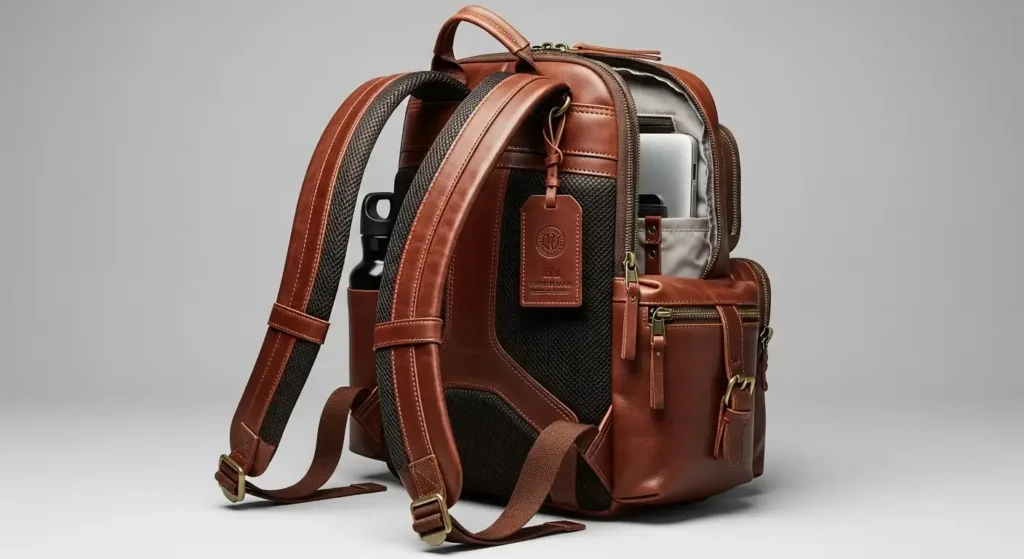
Leather is naturally heavier than nylon or canvas. A well-made leather backpack weighs 1.5 to 2.5 kg before you pack anything. That makes comfort engineering essential, not optional.
Padded shoulder straps with ergonomic shaping reduce pressure points during long carries. Look for at least 1 cm of padding with a contoured shape that follows the shoulder curve.
Sternum straps and hip belts distribute weight away from the shoulders. These are especially important for travel leather backpacks carrying 10 to 15 liters of load.
Breathable back panels with air channels or foam padding reduce heat buildup. Leather backs directly against your back trap moisture and become uncomfortable fast.
A comfortable leather backpack is one you will actually wear daily, which means it earns its cost far more than a bag that sits unused.
What Size and Capacity Should You Choose?
Capacity choice depends entirely on your primary use case. Getting this wrong means the bag either feels oversized or runs out of space constantly.
| Use Case | Ideal Capacity |
| Daily office commute | 20 to 25 liters |
| Laptop + minimal gear | 15 to 20 liters |
| Weekend travel | 25 to 35 liters |
| Minimalist EDC | 10 to 15 liters |
A laptop backpack should comfortably fit your device with at least 5 liters of additional usable space. Going too large adds unnecessary bulk; going too small forces you to overpack and strains the seams.
For business leather backpacks, 20 to 25 liters is the standard sweet spot. It fits a 15″ laptop, documents, charger, and daily essentials without looking oversized in a professional setting.
How Durable Is a Leather Backpack Compared to Synthetic?
Leather and synthetic materials serve different buyer priorities. Here is how they compare honestly:
| Factor | Leather | Synthetic (Nylon/Canvas) |
| Lifespan | 15 to 25 years | 3 to 7 years |
| Weight | Heavier | Lighter |
| Weather resistance | Moderate (needs conditioning) | High |
| Appearance over time | Improves (patina) | Fades and frays |
| Repairability | High | Low |
| Upfront cost | Higher | Lower |
Leather wins on longevity, repairability, and long-term appearance. Synthetic wins on weight and weather resistance out of the box. For a long-term investment backpack, full-grain leather has a clear edge.
A leather backpack that costs three times more but lasts eight times longer is the better financial decision over a decade.
How Can You Maintain a Leather Backpack to Extend Its Lifespan?
Leather is low maintenance but not zero maintenance. A basic care routine keeps a high-quality leather bag in excellent condition for decades.
Conditioning every 3 to 6 months prevents the leather from drying out and cracking. Use a product specifically designed for the leather type (vegetable-tanned leather needs different conditioners than chrome-tanned).
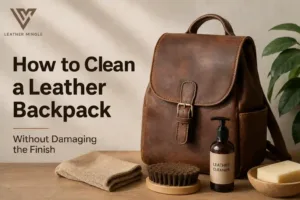
Cleaning after exposure to dirt or moisture removes residue before it penetrates the grain. Use a damp cloth for surface dirt and a dedicated leather cleaner for deeper marks.
Protecting from water with a leather-safe waterproofing spray adds an important barrier. Leather is not fully waterproof by nature, so protection matters in wet climates.
Proper storage with a dust bag and stuffed interior prevents deformation between uses. Never store a leather backpack compressed under other items.
Final Verdict: Is a Leather Backpack a Long-Term Investment?
Yes, a high-quality leather backpack is one of the few everyday carry items that genuinely appreciates in character over time. A full-grain or top-grain leather bag bought from a quality source does not just survive years of use. It looks better for it.
The cost per year of ownership drops significantly when the bag lasts 15 to 25 years. It is not an impulse buy. It is a considered purchase that pays back in durability, style, and product longevity.
Ready to invest in the right one? Explore LeatherMingle’s premium leather backpack collection and find a bag built to outlast every synthetic option on the market.
Frequently Asked Questions
How long does a leather backpack last?
A full-grain or top-grain leather backpack lasts 15 to 25 years with regular conditioning and proper care. Lower grades like genuine or bonded leather may only last 3 to 5 years.
What is the best leather type for a backpack?
Full-grain leather is the best choice for durability and aging. It retains the natural hide surface, resists abrasion, and develops a patina over time that improves its appearance.
How do I know if a leather backpack is good quality?
Check the grain texture for natural variation, feel the leather thickness, inspect the stitching for tight double seams, and look for metal hardware. Finished edges and riveted stress points are strong quality signals.
Is a leather backpack worth the higher price?
Yes. A premium leather backpack costs more upfront but lasts significantly longer than synthetic alternatives. Over a 10-year period, the cost per use is often lower than replacing cheaper bags every few years.
Can leather backpacks handle daily use?
Absolutely. Leather designed for daily carry, especially vegetable-tanned or cowhide leather, handles commuting, office use, and travel without breaking down when properly maintained.
How do I protect my leather backpack from rain?
Apply a leather-safe waterproofing spray every few months. Wipe down the bag immediately after rain exposure and allow it to dry naturally away from direct heat.


Add comment